Introduction
International shipping has evolved rapidly over the last few years. In 2026, businesses operate in a logistics environment shaped by digital customs systems, AI-driven supply chain visibility, rising compliance requirements, global trade disruptions, and increased customer delivery expectations.
Modern global logistics is no longer just about moving cargo from one country to another. Successful international shipping depends on accurate documentation, efficient customs clearance, freight coordination, visibility systems, risk management, and reliable logistics partnerships.
Whether you are importing from China, exporting from the UK, or managing complex international supply chains, understanding the shipping process is critical for reducing delays, controlling costs, and improving operational efficiency.
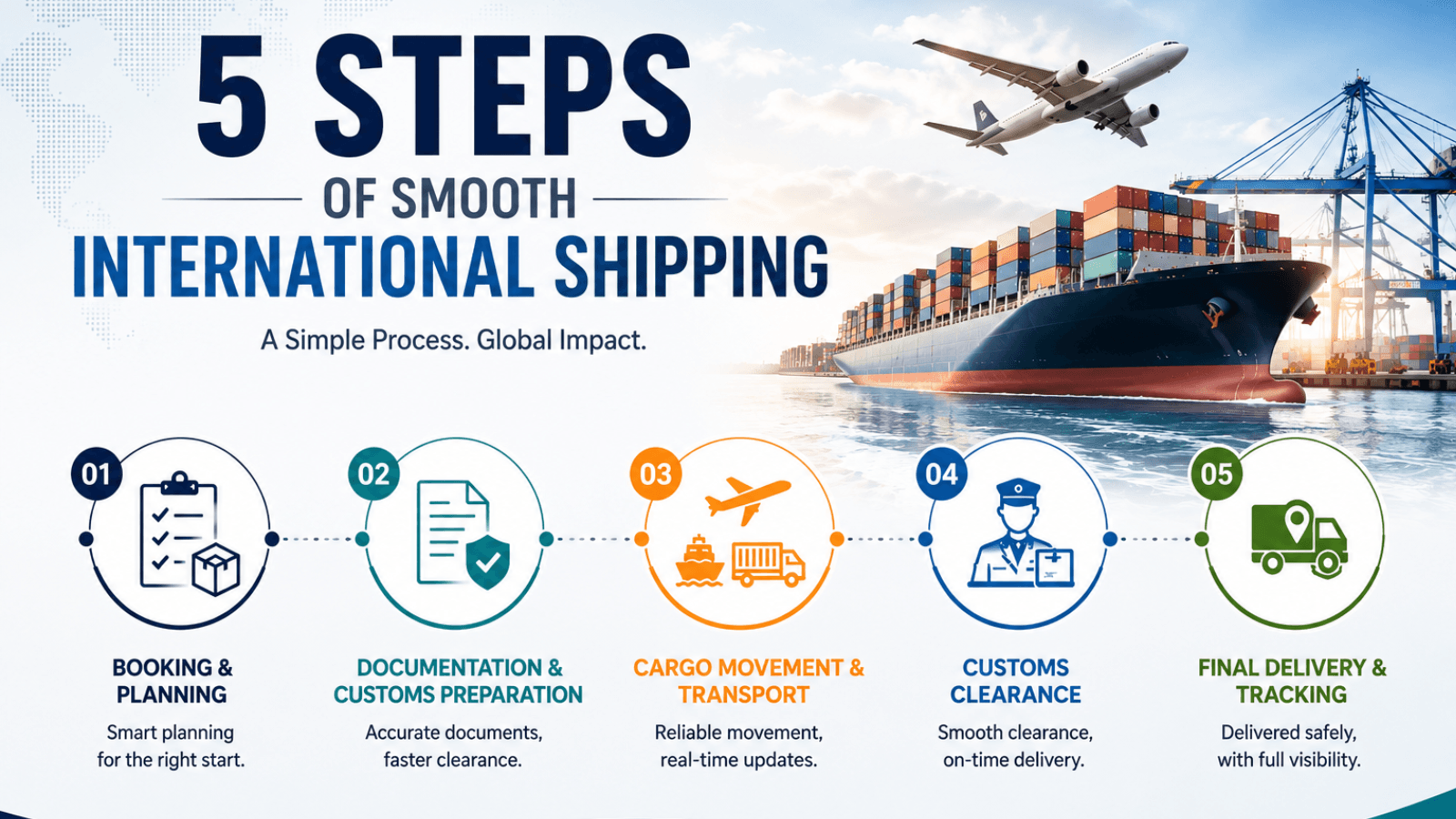
This guide explains the five key steps behind smooth international shipping in 2026 — and how freight forwarding partners like Clarusto Logistics help businesses execute each stage with confidence.
Why International Shipping Has Become More Complex in 2026:
Global trade is becoming increasingly data-driven. Governments and customs authorities are implementing stricter border systems focused on security compliance, digital declarations, trade transparency, automated risk scoring, and shipment visibility.
At the same time, businesses face growing pressure to reduce delivery delays, improve inventory flow, lower landed costs, increase supply chain resilience, and deliver faster to customers.
According to the World Trade Organization (WTO), global supply chain digitisation and trade facilitation continue to reshape how cargo moves across borders.
Source: https://www.wto.org/
International shipping now requires far more coordination than simply booking freight. Businesses that understand the logistics process are better positioned to avoid customs issues, operational disruptions, and unnecessary transportation costs.
Step 1 — Booking & Cargo Planning
Every successful shipment begins with proper planning. Cargo planning directly affects shipping costs, transit times, customs readiness, inventory availability, delivery reliability, and supply chain efficiency.
Before cargo moves, businesses must determine air freight vs sea freight, FCL vs LCL shipping, door-to-door vs port-to-port delivery, transit priorities, cargo handling requirements, and import/export regulations.
Effective cargo planning also includes route optimisation, shipment scheduling, supplier coordination, container allocation, carrier selection, and risk assessment.
Why Cargo Planning Matters
Poor planning often leads to missed shipping windows, port congestion delays, higher freight costs, storage charges, and delivery disruptions.
In 2026, logistics disruptions can occur quickly due to weather events, customs pressure, geopolitical issues, labour shortages, or fuel price fluctuations. Businesses that plan shipments proactively — with support from supply chain management specialists — reduce supply chain risk significantly.
Step 2 — Documentation & Customs Preparation
Documentation errors remain one of the biggest causes of international shipping delays. Modern customs systems in 2026 are increasingly automated and data-driven.
Even small mistakes can trigger customs inspections, border holds, duty corrections, delayed cargo release, and compliance investigations.
The Rise of Digital Customs Systems
Border systems across the UK and Europe increasingly rely on electronic declarations, pre-lodgement systems, automated shipment screening, AI-assisted customs checks, and real-time data verification.
This means customs issues are often identified before cargo even arrives at the port.
According to HM Revenue & Customs (HMRC), businesses must ensure customs declarations and import documentation are accurate to avoid delays and penalties.
Source: https://www.gov.uk/government/organisations/hm-revenue-customs
Accurate customs preparation helps businesses clear cargo faster, reduce inspections, avoid border delays, improve shipment reliability, and minimise compliance risk. Clarusto supports this through customs clearance and customs brokerage services.
Step 3 — Cargo Movement & International Transportation
Once documentation is complete and cargo is approved, the transportation process begins. Businesses typically choose between air freight, sea freight, road transport, rail freight, and multimodal logistics.
The right transportation method depends on cargo urgency, shipment size, budget, delivery deadlines, and product type.
Air Freight
Air freight is ideal for time-sensitive cargo, high-value goods, urgent inventory replenishment, and fast international delivery. Benefits include faster transit times, improved shipment reliability, reduced inventory delays, and better schedule consistency. Explore air freight services when speed is the priority.
Sea Freight
Sea freight remains the most cost-effective option for large-volume international cargo. Benefits include lower transportation cost, large cargo capacity, global port connectivity, and flexible container solutions. Businesses commonly choose between FCL (Full Container Load) and LCL (Less than Container Load). Learn more about sea freight logistics.
Road Transport & Last-Mile Logistics
Road freight supports port transportation, warehouse movement, cross-border delivery, and final-mile fulfilment. Efficient road logistics helps businesses maintain delivery continuity after cargo clears customs through last mile delivery coordination.
Why Shipment Visibility Matters in 2026
Modern supply chains depend heavily on real-time shipment visibility. Businesses increasingly expect live tracking, predictive ETAs, shipment alerts, proactive communication, and logistics transparency.
According to Gartner supply chain research, visibility and digital logistics capabilities are becoming critical competitive advantages for global businesses.
Source: https://www.gartner.com/en/supply-chain
Step 4 — Customs Clearance
Customs clearance is one of the most important stages of international shipping. Even when cargo arrives on time, shipments can still become delayed due to incorrect documentation, compliance failures, missing declarations, duty and VAT issues, product inspections, or import restrictions.
How Modern Customs Systems Work
In 2026, customs authorities increasingly focus on digital border systems, automated shipment screening, security compliance, trade transparency, and risk-based inspections.
Certain products may require additional compliance documentation, including CE certifications, UKCA markings, safety declarations, product testing certificates, and import permits.
The Cost of Customs Delays
A shipment delayed at customs can create storage charges, demurrage fees, delivery disruptions, inventory shortages, production downtime, and customer dissatisfaction.
The British International Freight Association (BIFA) regularly highlights the importance of customs expertise and accurate declarations in avoiding border disruption.
Source: https://www.bifa.org/
Efficient customs clearance helps businesses reduce border delays, improve cargo flow, lower operational risk, maintain delivery timelines, and protect supply chain continuity. The fastest shipment means nothing if cargo cannot clear customs efficiently.
Step 5 — Final Delivery & End-to-End Visibility
After customs clearance, the final logistics process begins. This includes warehouse coordination, last-mile delivery, inventory management, delivery scheduling, and shipment confirmation.
In 2026, customers expect faster delivery timelines, accurate ETAs, real-time updates, and supply chain transparency. Visibility is no longer optional — it is a standard business expectation.
Why End-to-End Logistics Visibility Matters
Strong shipment visibility helps businesses respond to delays faster, improve inventory planning, reduce operational disruption, improve customer satisfaction, and increase supply chain efficiency.
According to DHL logistics trend research, end-to-end visibility and digital supply chain integration are becoming central to modern logistics performance.
Source: https://www.dhl.com/global-en/home/insights-and-innovation.html
Common International Shipping Challenges in 2026
Rising freight costs from fuel volatility, geopolitical tensions, and port congestion continue impacting shipping rates.
Customs delays from incorrect documentation and stricter compliance systems increase border disruption risk.
Visibility gaps from poor tracking and communication create operational uncertainty.
Supply chain disruption from weather events, labour shortages, and geopolitical instability affect cargo movement globally.
Compliance complexity as import/export regulations continue evolving across multiple countries.
Businesses that invest in stronger logistics planning reduce these risks significantly.
The Future of International Shipping
The future of global logistics will increasingly focus on AI-powered supply chains, real-time visibility, automated customs systems, predictive logistics, sustainable transportation, and digital freight coordination.
Businesses that modernise their logistics operations gain advantages through faster cargo movement, better shipment control, improved delivery reliability, reduced operational costs, and stronger customer experience.
Why Businesses Choose Clarusto Logistics
At Clarusto Logistics, we help businesses simplify international shipping through freight forwarding solutions, air freight services, sea freight logistics, customs clearance support, global cargo coordination, real-time shipment visibility, and end-to-end logistics management.
Our focus is simple: deliver efficient, reliable, and transparent logistics solutions for modern global trade. Contact our team for a bespoke international shipping plan.
Final Thoughts
Smooth international shipping is built through proper cargo planning, accurate documentation, efficient freight movement, strong customs coordination, and real-time shipment visibility.
Businesses that optimise these five areas reduce delays, improve efficiency, and strengthen supply chain performance. As international trade continues evolving in 2026, companies that invest in smarter logistics processes will be better positioned for long-term growth and operational resilience.
Frequently Asked Questions
What are the main steps of international shipping?
The main steps include cargo planning, documentation preparation, freight transportation, customs clearance, and final delivery.
Why do international shipments get delayed?
Common causes include incorrect customs documentation, port congestion, compliance issues, and poor shipment coordination.
What is customs clearance in shipping?
Customs clearance is the process of verifying and approving cargo movement across international borders through customs authorities.
What documents are required for international shipping?
Typical documents include commercial invoices, packing lists, bills of lading, HS codes, and customs declarations.
Why is shipment visibility important?
Real-time shipment visibility helps businesses track cargo, improve delivery planning, and reduce supply chain disruption.
Should UK businesses use a freight forwarder for international shipping?
Yes. A forwarder coordinates carriers, customs, documentation, and delivery — reducing delays and giving access to negotiated freight rates. Clarusto provides integrated freight forwarding