
Self-Healing Supply Chains in 2026: How AI Is Reshaping the Future of Global Logistics
Self-healing supply chains are transforming global logistics through AI-powered automation, predictive analytics, and real-time visibility. Discover how intelligent logistics systems help businesses reduce disruption, optimise freight operations, and build more resilient UK and global supply chains in 2026.
Introduction
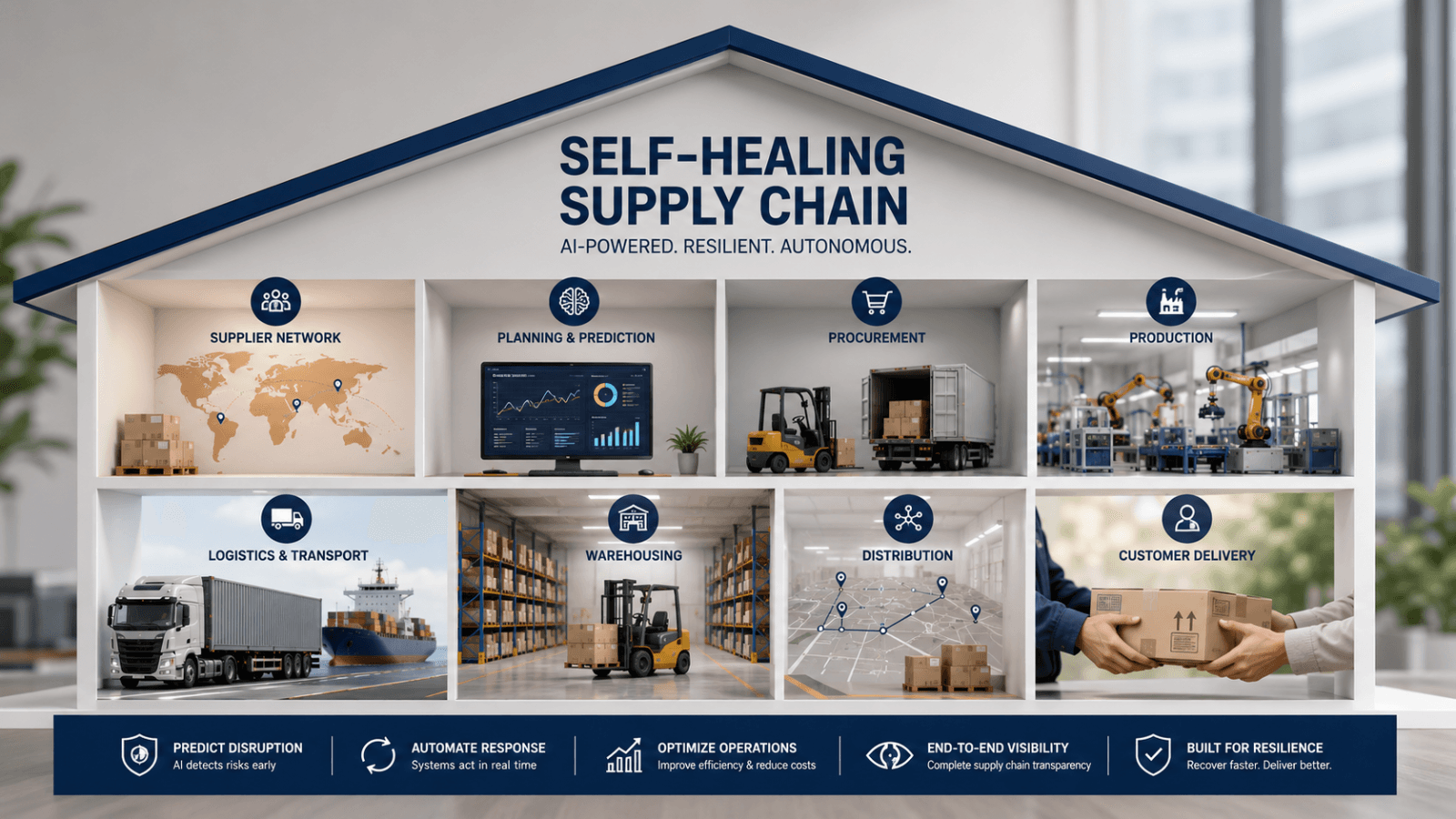
Global supply chains are changing faster than ever. For years, logistics operations focused mainly on visibility — tracking shipments, monitoring inventory, and improving delivery timelines. Today, businesses need much more than tracking. They need supply chains that can predict disruption, adapt automatically, and recover quickly when problems occur.
This shift is driving the rise of the self-healing supply chain. Powered by artificial intelligence, predictive analytics, automation, and real-time logistics visibility, self-healing supply chains are designed to identify operational risks early and respond before disruption affects customers, production schedules, or delivery performance.
For UK importers, exporters, manufacturers, eCommerce brands, distributors, and retailers, this is becoming increasingly important. Freight volatility, customs delays, geopolitical uncertainty, rising transport costs, labour shortages, and changing customer expectations are putting pressure on logistics operations across every industry.
According to the World Economic Forum, supply chains are now operating in an environment shaped by persistent volatility and structural disruption, making resilience and intelligent logistics planning essential for long-term growth.
Source: https://www.weforum.org/agenda/archive/supply-chains/
What Is a Self-Healing Supply Chain?
A self-healing supply chain is an intelligent logistics ecosystem that can automatically identify disruption and trigger corrective action with minimal manual intervention.
Instead of waiting for logistics teams to manually detect delays or inventory shortages, AI-powered systems continuously analyse shipment movement, port congestion, warehouse operations, customs processing, inventory levels, supplier performance, transport capacity, weather disruption, and demand fluctuations.
