Overview
Introduction: A System Under Structural Pressure
The logistics playbook is being rewritten.
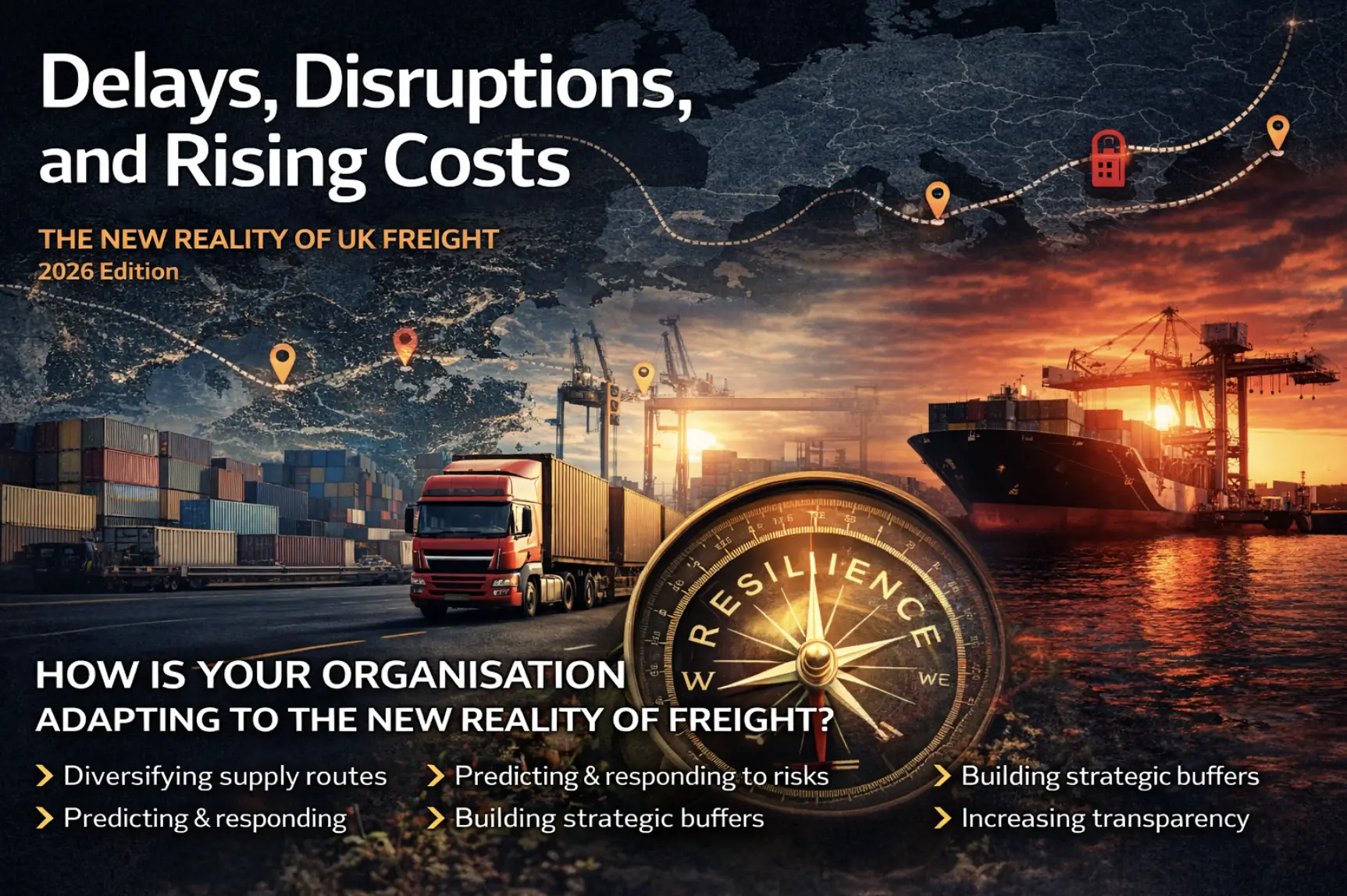
What were once considered temporary disruptions — shipping delays, rising costs, and port congestion — have now become structural realities shaping global trade in 2026. For UK freight operators and supply chain leaders, uncertainty is no longer an exception. It is the operating environment.
From geopolitical instability to fuel volatility and capacity strain, the global logistics system is undergoing a fundamental transformation.
What Is Driving UK Logistics Disruption in 2026?
The current disruption is not caused by a single factor, but a combination of global pressures:
Strain on global port infrastructure
These factors are reshaping how goods move into and out of the UK, increasing both cost and complexity.
Port Congestion and Rerouting Challenges
As global trade routes shift, pressure is being redistributed across ports in Europe and the UK.
Rising Freight Costs and Fuel Volatility
The cost of moving goods is increasing across all transport modes.
The Growing Expectation Gap in Logistics
While logistics realities are changing rapidly, customer expectations remain largely unchanged.
Stable pricing
However, the current environment makes these expectations increasingly difficult to meet. This has created a widening gap between expectation and operational reality.
For logistics providers, managing this gap now requires:
Stronger customer alignment
Industry Impact: Who Is Most Affected?
Retail & E-commerce
Retailers face stock shortages, delayed replenishment cycles, and rising last-mile delivery costs due to unstable import schedules.
Manufacturing
Production lines are increasingly vulnerable to delays in raw materials and components, forcing companies to build buffer inventory.
FMCG & Food Supply Chains
Perishable goods and packaging materials are particularly affected by transport delays and secondary shortages such as CO2 supply constraints.
Stronger supplier collaboration models
The focus is moving from cost optimization to risk resilience.
What This Means for UK Freight Moving Forward
The UK remains highly exposed to global logistics disruption due to its reliance on international trade.
As global shipping routes remain unstable, businesses must:
Strengthen risk management strategies
This is not a temporary phase — it represents a long-term structural shift in global freight dynamics.
Conclusion: Adapting to the New Logistics Reality
Delays, disruptions, and rising costs are no longer anomalies — they are the defining characteristics of modern logistics.
The companies that will succeed in this environment are not those waiting for stability to return, but those actively adapting to ongoing uncertainty.
At Clarusto Logistics, we believe that navigating this new landscape requires more than operational capability — it requires insight, agility, and strategic foresight.
Stay Ahead
For more insights on UK freight, global logistics trends, and supply chain strategy, follow Clarusto Logistics.
Frequently Asked Questions
What is causing UK logistics disruption in 2026?
UK logistics disruption in 2026 is being driven by a combination of geopolitical tensions, shipping route rerouting, fuel price volatility, and global port congestion. These factors are increasing transit times and operational costs across supply chains.
Why are shipping delays increasing globally?
Shipping delays are increasing due to longer alternative routes, restricted access to key trade corridors, and congestion at major ports. These factors are adding an estimated 10–21 days to transit times in many global freight lanes.
How is port congestion affecting UK freight?
Port congestion is causing longer vessel waiting times, slower unloading processes, and increased costs such as demurrage and detention. This is disrupting supply chain schedules and reducing overall logistics efficiency.
Why are freight costs rising in the UK?
Freight costs are rising due to higher fuel prices, longer shipping routes, increased insurance premiums, and additional handling charges caused by delays and rerouting of cargo.
Which industries are most affected by logistics disruption?
Retail, e-commerce, manufacturing, FMCG, and automotive sectors are among the most affected due to reliance on timely imports, just-in-time inventory systems, and global supplier networks.
Is UK logistics disruption temporary or long-term?