
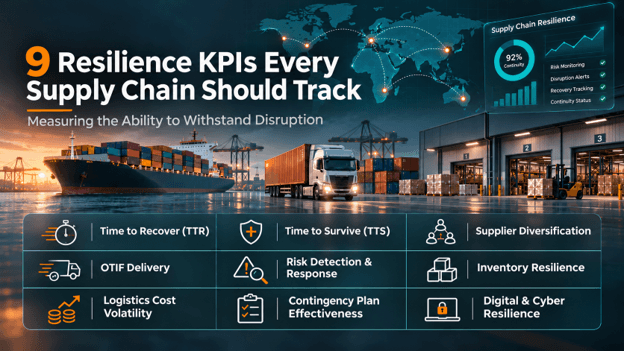
9 Resilience KPIs Every Supply Chain Should Track: Measuring the Ability to Withstand Disruption
Efficiency shows how your supply chain performs on a normal day. Resilience reveals what happens when disruption strikes. Explore nine essential KPIs to assess vulnerabilities, measure recovery and build a supply chain better prepared for uncertainty.
Overview
A supply chain can appear efficient right up until the moment it is tested. One delayed shipment, one unavailable supplier or one blocked trade route can expose weaknesses that routine performance reports never reveal.
For years, businesses have measured supply chain performance through cost, delivery speed, inventory turnover and service levels. These indicators remain important, but they tell only part of the story. They show how a supply chain performs when conditions are relatively stable. They do not necessarily show whether it can withstand disruption.
That distinction matters more than ever. Geopolitical uncertainty, extreme weather, cyber incidents, changing trade requirements and transport constraints are placing pressure on global supply networks.
Research published by BSI in October 2026 found that 54% of surveyed organisations still manage supply chain risk primarily reactively. More concerning, 37% said they had not followed a pre-agreed crisis plan during a recent disruption.
The problem is not simply that disruption happens. It is that businesses can have risk policies, contingency documents and supplier agreements in place without knowing whether those arrangements will work under pressure.
Supply chain resilience must therefore be measured, tested and improved—not assumed.
The following nine KPIs can help businesses understand where their vulnerabilities lie and whether their operations are genuinely prepared for disruption.
How long would it take your supply chain to return to normal after a disruption?
Time to Recover measures the period required to restore an operation, supplier, facility or logistics route to an acceptable operating level following an incident.
